SIBO and IMO drive IBS symptoms like bloating, gas, constipation or diarrhea. Learn low FODMAP safe foods, motility support, and gut healing strategies to reduce fermentation and calm flares.
Does this sound like you?
- You’ve been diagnosed with IBS
- Bloating that worsens throughout the day. Many describe it as looking six months pregnant by day’s end.
- Cramping, abdominal pain that comes and goes
- Gas or burping that seems worse after certain foods (like legumes, certain vegetables, or dairy)
- Irregular digestion: alternating constipation and diarrhea, or chronic constipation or diarrhea
- Nausea or feeling overly full after small portions
- Food sensitivities that seem to have increased over time
- Unexplained weight changes: sometimes loss, sometimes gain
- Sugar cravings or particular food cravings, especially carbs
- Strictly limited diet. I often hear “I can only eat four foods.”
If you find yourself nodding “yes” to several of these, small intestine bacteria overgrowth (SIBO) or intestinal methanogen overgrowth (IMO) may be the culprit.
Note that if you’ve been diagnosed with IBS, there is a near 80% chance that SIBO (IBS-D) or IMO (IBS-C) is the culprit.
Understanding SIBO vs. IMO
Both SIBO and IMO involve an overgrowth of microbes where they shouldn’t be: in the small intestine.
-
SIBO occurs when bacteria that normally live in the large intestine start colonizing the small intestine. This can lead to bloating, diarrhea, and nutrient absorption issues.
-
IMO involves an overgrowth of methane-producing archaea (not technically bacteria) called methanogens. It’s often associated with constipation, slower motility, and bloating that worsens over the course of the day.
If you have SIBO and or IMO, when you eat specific classes of carbohydrates (FODMAPs), the bacteria and methanogens ferment the fibers, releasing hydrogen and methane gases that cause bloating (sometimes severe) and changes in transit time, resulting in either constipation or diarrhea.
I work with a lot of SIBO & IMO cases, and both can be very frustrating and chronic unless proper treatment protocol is followed (which it often is not, leading to a high recurrence rate).
One of the biggest challenges with SIBO & IMO is finding a diet that won’t trigger painful bloating and irregular bowel movements. Although we often recommend a low FODMAP diet to help manage symptoms, people get frustrated because trigger foods vary by individual, so it’s not as easy as just following a low FODMAP food list (and this is one reason I have a job!).
While diet alone isn’t a cure, it’s one of the most powerful tools for symptom relief and long-term gut support. There are several foods I have determined are among the “safest” foods for SIBO and IMO folks, meaning these foods are the least likely to cause bloating and gut pain. There are also a few absolute no-no foods, and we’ll get into those too.
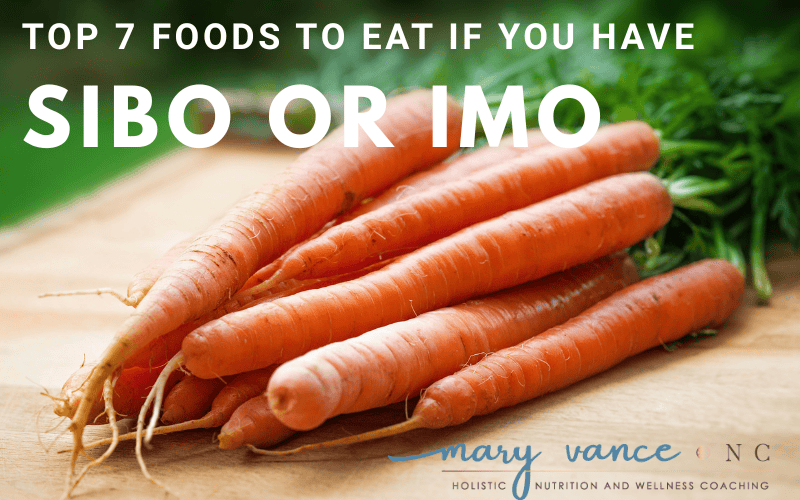
Top 7 Foods for Healing SIBO and IMO
I’d like to mention also that people get confused because there is so much conflicting information about FODMAP foods. Some sites say foods are ok while others say they’re high FODMAP. This often has to do with the quantity of the food. Foods can be low FODMAP in small quantities and moderate to high FODMAP in larger portions.
The other confusing point is some SIBO-IMO people will be ok with certain higher FODMAP foods, and others will need to be stricter. I have a two phase process I use in my practice to help people determine their ideal diet while treating SIBO and IMO. It can feel overwhelming and confusing!
Another rule of thumb to keep in mind is FODMAP foods are limited to carbohydrates, because that is the category of foods that contain fibers the bacteria and methanogens ferment. All proteins and fats are safe low FODMAP foods. Make sure to increase your protein and good fats like olive oil, ghee, coconut oil (butter not allowed typically) to maintain weight and muscle mass. Many people lose weight with SIBO IMO because their diets are so restricted. You need to increase other macronutrients like protein when you decrease others (like carbs).
And finally, I recommend cooking veggies very well to break down the fibers and make them easier to digest. Salads and raw foods can worsen bloating. This is a great time for puréed soups or mashes. I’ve recommended putting FODMAP safe veggies like carrots and parsnip or celery root in an instant pot and then making a mash or soup out of that.
These foods are gentle on the gut, nutrient-dense, and help calm inflammation while supporting the gut lining and motility. Use them as a foundation as you work through healing.
1. Zucchini
Hydrating and easy to on digest, zucchini is a SIBO-friendly vegetable that won’t ferment excessively in the gut. It’s fairly fiber-rich and contains a good amount of water which helps keep things moving without feeding bacterial overgrowth. I recommend it steamed, sautéed, or spiralized into noodles as a alternative to pasta. Now here’s the caveat: I used to recommend any quantity of zucchini as low FODMAP because it always seemed well tolerated among my SIBO IMO clients. However, according to the Monash app (considered among the best low FODMAP tools), zucchini is only low FODMAP in smaller quantities of 1/3 – 1/2 cup. So now I advise caution with zucchini, though anecdotally it does seem to be one of the best tolerated foods for my SIBO IMO clients.
2. Wild-Caught Salmon
Rich in anti-inflammatory omega-3 fatty acids, salmon helps reduce inflammation and supports the repair of the intestinal lining. Protein is crucial during gut healing to maintain muscle mass and energy. Lighter proteins like poultry and fish can be easier to digest options over red meat, though I love red meat as a nutrient-dense protein which is why I often recommend digestive enzymes to help break down and digest better during treatment. Choose wild-caught ideally (though there are some nice sustainably farmed options out there like Ora) and pair them with cooked or puréed veggies for a nourishing meal.
3. Carrots
Carrots are probably the most well tolerated veggie for most people with SIBO or IMO. And the well tolerated veggie list is somewhat limited. Carrots are rich in antioxidants like beta carotene and provide gentle fiber that supports gut health without feeding overgrowth. Steamed or roasted carrots make an excellent side dish that’s both grounding and gut friendly. They’re also great mashed or blended into a soup. I have a well loved healing carrot soup recipe that I give my clients!
4. Jasmine Rice or White Rice
I especially recommend white rice to my SIBO IMO clients who struggle with weight loss. It’s a simple, low-residue carb that provides energy and can help bulk up meals and add calories. I recommend adding it to soups or stews. My simple gut healing soup recipe is a bone broth base with carrots, shredded chicken, small quantity zucchini if tolerated, white rice, and chard or small quantity spinach.
5. Ginger
This powerful root is a superstar prokinetic, meaning it helps digestive motility. Ginger naturally stimulates the migrating motor complex (MMC), the wave-like motion that clears bacteria from the small intestine between meals. The MMC is damaged in those with SIBO/IMO, and prokinetics like ginger help repair it. I advise my IMO clients to drink two strongly brewed cups of freshly grated ginger tea daily before a meal. So, sip on ginger tea, add fresh ginger to soups, add to smoothies, or blend it into dressings for a natural motility boost. It’s also anti-inflammatory and boosts circulation!
6. Blueberries
Fruit can feel limited on a low FODMAP diet, so I always recommend blueberries. They’re among the most nutrient dense and beneficial foods on the planet. Packed with antioxidants and polyphenols, blueberries help reduce oxidative stress and are great for brain and gut health. They’re generally well tolerated in moderation. Try them blended into a low-FODMAP smoothie.
7. Leafy Greens
It is difficult to get enough fiber on a low FODMAP diet, so I recommend as many FODMAP safe veggies as possible. Leafy greens like arugula, Swiss chard, and baby kale are great choices and pair well with a protein and rice. Leafies provide essential minerals and plant compounds that support liver detoxification. Salad greens are usually well tolerated, but I have people use caution with raw foods which can be difficult to digest and trigger bloating. The one caveat here is spinach which is high FODMAP in quantities over 1.5 cups chopped (which cooks way down).
How to Incorporate These Foods
Building meals with these foods doesn’t have to be complicated. A few ideas:
-
Breakfast: zucchini scramble with greens and herbs
-
Lunch: Salmon with chard and celery root puree
-
Dinner: Soup with shredded chicken and veggies like carrot, baby kale
-
Snack: Handful of blueberries
-
Drink: ginger tea before meals
Remember to chew thoroughly, eat slowly (something I stress with every client!), and give your body time between meals (at least 3–4 hours) to allow your migrating motor complex to activate to support digestion.
Foods to Limit with SIBO & IMO
While you’re addressing SIBO or IMO, you need to limit carbs that feed bacteria and archaea such as the following:
-
High-FODMAP fruits (apples, mango, watermelon)
-
Legumes and beans
-
Onions and garlic
-
Refined carbohydrates and added sugars
- Dairy and gluten
The above foods seem to trigger the most problems for people, but the full list is quite extensive (read my post on FODMAPs here). I have people reintroduce eliminated foods slowly once symptoms calm and balance is restored.
Conclusion
Living with SIBO or IMO can make eating feel like a minefield. Every meal becomes a guessing game which can feel stressful.
The good news: once you understand how to reduce fermentation, support motility, and calm inflammation, you can choose foods that genuinely help your healing process. The seven foods we discussed seem to be the easiest for SIBO & IMO people to tolerate, but watch quantities and keep a food journal so you can determine which foods work best for you.
Make sure to book a discovery call here to learn about my coaching programs if you suspect IMO or SIBO or if you, like so many of my clients, have not received the proper guidance for SIBO IMO care. I specialize in helping people struggling with recurrent IMO/SIBO.
Frequently Asked Questions
What is the main difference between SIBO and IMO?
Small intestinal bacterial overgrowth, or SIBO, involves excess bacteria in the small intestine and commonly produces hydrogen gas, leading to bloating and diarrhea. Intestinal methanogen overgrowth, or IMO, involves methane producing archaea that slow gut motility and are strongly linked to constipation and abdominal pressure.
Why does bloating get worse as the day goes on?
Bloating often increases through the day because microbes ferment carbohydrates from each meal. Gas accumulates gradually, especially when motility is slow. In methane dominant overgrowth, delayed transit traps gas, causing visible distention and tightness by late afternoon or evening.
Is diet enough to cure SIBO or IMO?
Diet alone will not eradicate overgrowth but helps manage symptoms. Lowering fermentable carbohydrates reduces gas production and pain while antimicrobial or antibiotic treatment addresses microbial imbalance. The goal is symptom stability during treatment, not permanent food restriction.
Why are protein and fats considered safer foods?
Bacteria and methanogens ferment carbohydrates, not protein or dietary fat. Foods such as meat, fish, eggs, and healthy oils do not significantly increase gas production via fermentation. Emphasizing protein preserves muscle mass and supports energy when carbohydrate intake is reduced.
How does ginger help with SIBO or IMO symptoms?
Ginger supports the migrating motor complex, a cleansing wave that clears bacteria from the small intestine between meals. Improving motility reduces stagnation, fermentation, and bloating. Ginger also has anti inflammatory and prokinetic effects that may ease nausea and discomfort.
How do I help clients choose safe foods?
I use structured elimination phases to identify individual triggers while preserving nutrient intake. She adjusts portion sizes, food preparation methods, and meal timing to reduce fermentation, support motility, and stabilize energy without unnecessary long term restriction.
Why is reintroducing foods slowly so important?
Gradual reintroduction helps identify specific fermentable triggers and prevents relapse. Adding one food at a time allows monitoring of bloating, stool changes, and pain. This structured process supports microbiome diversity while protecting healing progress and digestive stability.
 Welcome to my site! I am a holistic nutrition consultant based in California, though I work with clients all over the world. I love houseplants, dogs, snow sports, and music that doesn't suck.