Updated research shows full fat and fermented dairy may support heart, metabolic, and gut health for many people. Inflammation risk is individual. Focus on quality, tolerance, and lab markers.
For years, the diet wars have painted dairy as either an artery-clogging villain or a toxic, inflammatory poison. Remember the days of yore when we were encouraged to consume skim milk, margarine, low- or non-fat yogurt, and low fat “cheese” 🤮 because the saturated fat in full fat dairy was blamed for heart attacks and high cholesterol? The reasoning seemed solid at the time: Saturated fat was bad and would raise cholesterol, which in turn increased heart disease risk. (more on this in a bit)
Meanwhile over here in the holistic nutrition sphere, dairy was declared an evolutionary mismatch responsible for everything from acne to autoimmune disease. We were told that dairy is the perfect food: if you’re a baby cow. But that humans had no business consuming dairy, and we’re the only mammals that consumed it into adulthood.
I wrote a whole post about my former opinion on dairy here. I am choosing not to update it (it’s a now 12 year old post now) to illustrate how nutrition science and our professional opinions evolve.
And nutrition science is always evolving as new studies challenge old paradigms. We’ve seen many foods demonized over the years: eggs, gluten, and red meat, and dairy was always a part of this group. But is dairy really bad for humans?
Let’s take a look.
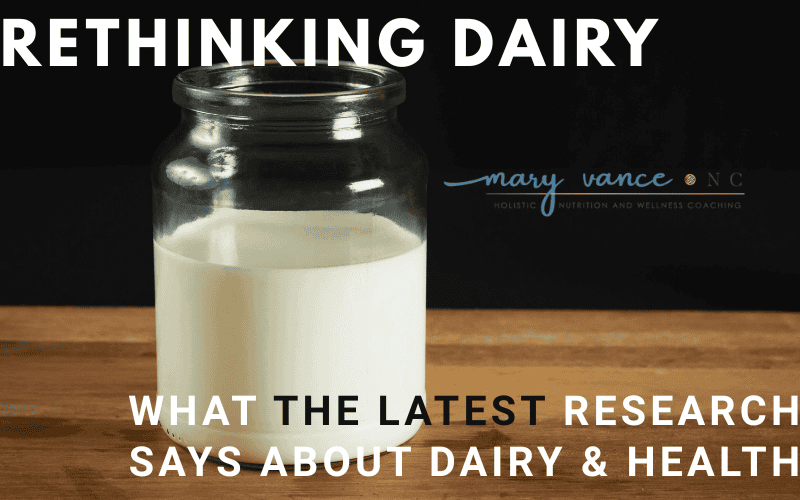
Rethinking Dairy
Because dairy was once considered an inflammatory food, I would have almost all of my nutrition clients eliminate it from their diets for at least 30 days (elimination diet) along with gluten and any other foods I suspected were potentially problematic. Most people did see a lot of improvement during the elimination diet, so I’d have them then reintroduce the eliminated foods to see which caused symptoms. Dairy would, in many cases, contribute to acne, loose stool, or cause congestion (it can encourage mucous production). If it did not produce adverse symptoms, I would tell people to consume it sparingly and stick to fermented forms like kefir or yogurt. I used to advise avoiding cheese almost entirely.
I’ve since changed my tune a bit on dairy, especially in light of updated research. A massive scoping review of nearly 100 studies paints a different picture. It found that full-fat dairy is not only not harmful, but that it may reduce the risk of several chronic conditions, including type 2 diabetes, colorectal cancer, and cardiovascular disease. Low-fat dairy, by contrast, offered little or no benefit in most outcomes.
What the Latest Research Suggests
Sixty-six reviews examined associations between overall dairy consumption and health outcomes. Findings show that dairy intake is either associated with reduced risk or has no association with most of the health outcomes considered. Six associations yielded inconclusive findings, and five showed that overall dairy consumption was linked to an increased risk of negative health outcomes. Dairy consumption was linked to a reduce risk of certain cancers (bladder, breast, colon).
A specific study new 2025 from the University of Minnesota found that people who regularly consumed whole-fat dairy in the form of whole milk, full-fat yogurt, and cheese had a 24% lower risk of developing coronary artery calcification (CAC). CAC is a strong early marker for heart disease.
In simple terms? Those who ate more whole-fat dairy were less likely to show signs of plaque building up in their arteries. Even more interesting was that this protective effect wasn’t seen with low-fat or skim dairy. I’ve never recommended consuming low fat or fat free dairy, as you need the fat to absorb the fat soluble nutrients like vitamins A, D, E, K. And low and fat free dairy aren’t whole foods. Always best to consume a food in its most unadulterated form.
So this is quite a big deal because for decades, full-fat dairy has been on the naughty list due to its saturated fat content. But this study, along with a growing body of research, is suggesting that quality, whole-fat dairy foods might actually support heart health rather than harming it.
- Complex effects on other markers: Some studies have found that while a diet with full-fat dairy might not be detrimental to heart health, it can increase fasting glucose and other markers of cardiometabolic risk. However, other research suggests that full-fat dairy may have beneficial effects on some markers of health.
- Role of specific dairy types: The type of dairy product may matter. Some research indicates that fermented dairy, such as cheese and yogurt, may have more beneficial effects on heart health and gut health.
- Need for more research: Experts suggest it is premature to make a universal recommendation that everyone should favor full-fat over low-fat dairy, as the evidence is still developing and the impact of saturated fat may differ depending on the food source. Whether saturated fat can raise your cholesterol or heart disease risk personally depends on your genome. For some people saturated fat intake doesn’t raise cholesterol or inflammatory markers, and for others, it does.
I’m encouraged by this information, as I support consuming the most diverse diet possible. Here are my takeaways from this study and other emerging research:
-
Dairy can be a valid component of a nutrient‑rich diet (for many people) rather than something to automatically exclude, but I think the form matters: fermented dairy (especially kefir & yogurt, some cheeses) may offer additional benefits (e.g., via gut microbiome) compared to non‑fermented forms like milk or cream.
-
The fat content question is less clear cut than once thought: Full‑fat dairy isn’t automatically “bad” in the way earlier guidelines assumed. That said, you would need to monitor your blood work, lipid panels & glucose specifically, to determine if it works for your body.
-
Individuality matters: lactose intolerance, milk protein allergy, skin issues, and personal digestive comfort still mean dairy isn’t appropriate for everyone. If you suspect you have an issue with dairy, try eliminating it for 21 days or so and reintroducing it.
The Nuance
We’re not completely out of the woods here though. The evidence on whether dairy is inflammatory is mixed. Whether or not dairy is inflammatory depends on the individual.
Conclusion
For one, dairy is no longer the automatic villain in nutrition it was once was. The evidence suggests that dairy foods, particularly minimally processed, fermented options, can play a supportive role in a well‑rounded diet, contributing both beneficial nutrients and anti-inflammatory effects.
However, as with most foods, the key is individualization. Dairy may be helpful for some, neutral for others, and inadvisable for a subset of people who don’t tolerate it or have health conditions that are worsened by dairy consumption.
TL;DR: high quality, full-fat dairy, especially fermented forms like yogurt and kefir, can be part of a nutrient dense, ancestral diet. As always, context matters. Some people don’t tolerate dairy well, but for many others, it’s a rich source of bioavailable protein, calcium, and fat-soluble vitamins.
Let’s stop vilifying food groups based on outdated or incomplete science and start looking at the bigger picture as well as making sweeping generalizations about how foods affect everyone.
Frequently Asked Questions
Why has dairy been labeled unhealthy in the past?
Dairy was linked to heart disease because it contains saturated fat, once thought to directly raise LDL cholesterol and cardiovascular risk. Holistic circles also labeled it inflammatory. However, newer large studies show dairy has neutral or mixed effects depending on type and overall diet quality.
Is full fat dairy worse than low fat dairy?
Research now suggests full fat dairy is not automatically harmful. Removing fat can reduce absorption of vitamins A, D, E, and K. Health impact depends on portion size, metabolic health, and whether dairy replaces refined carbohydrates or processed foods in the diet.
Does dairy cause inflammation for everyone?
Dairy does not cause inflammation in most people. Reactions usually stem from lactose intolerance, casein sensitivity, or digestive enzyme issues. Symptoms may include acne, bloating, or congestion. Personal tolerance varies based on gut health and genetics.
Are fermented dairy foods different from milk?
Fermented dairy such as yogurt, kefir, and aged cheeses contain probiotics that support gut microbiome balance. Fermentation reduces lactose and changes milk proteins, making these foods easier to digest and potentially less inflammatory than fresh milk or cream.
Can dairy be part of a healthy diet?
For many individuals, dairy provides high quality protein, calcium, potassium, and fat soluble vitamins. Studies show neutral or protective associations with metabolic and cardiovascular health. Choosing minimally processed options supports better outcomes than flavored or sugary products.
Should dairy be eliminated to test tolerance?
A short elimination of two to three weeks can help identify sensitivity. Reintroducing dairy slowly allows observation of skin, digestion, and energy changes. This method avoids unnecessary restriction while helping individuals assess whether dairy contributes to symptoms.
How can someone decide if dairy works for them?
Tracking digestion, cholesterol markers, inflammation symptoms, and overall energy helps determine tolerance. Mary Vance emphasizes personalized nutrition rather than fear based avoidance. Genetics, gut microbiome health, and dairy type all influence individual response.
 Welcome to my site! I am a holistic nutrition consultant based in California, though I work with clients all over the world. I love houseplants, dogs, snow sports, and music that doesn't suck.