Recovering from an acute diverticulitis flare involves four phases: bowel rest with clear liquids, a temporary low fiber diet, gradual fiber reintroduction, and long term high fiber maintenance diet. This guide explains what to eat during each stage, how long each phase typically lasts, and how to support gut healing while reducing the risk of future flare-ups.
I’ve worked with many diverticulitis cases over the years.
This is an often sudden condition that can feel terrifying when it flares. The abdominal pain, bloating, constipation, diarrhea, nausea, and fear of eating can leave people feeling anxious and confused about where to go next. Most people are told to simply “eat more fiber” or are given antibiotics and sent on their way with no clear path forward. And these folks continue struggling with recurring flare-ups, lingering digestive symptoms, or fear around food. That’s when they come to see me.
Diverticulitis is rarely just a random digestive issue. It is often the result of years of gut dysfunction, chronic inflammation, impaired motility (constipation), microbiome imbalances, stress, and dietary patterns that have slowly weakened the large intestine over time.
The good news? Your gut has an incredible ability to heal when you address the root causes. You can prevent future flares.
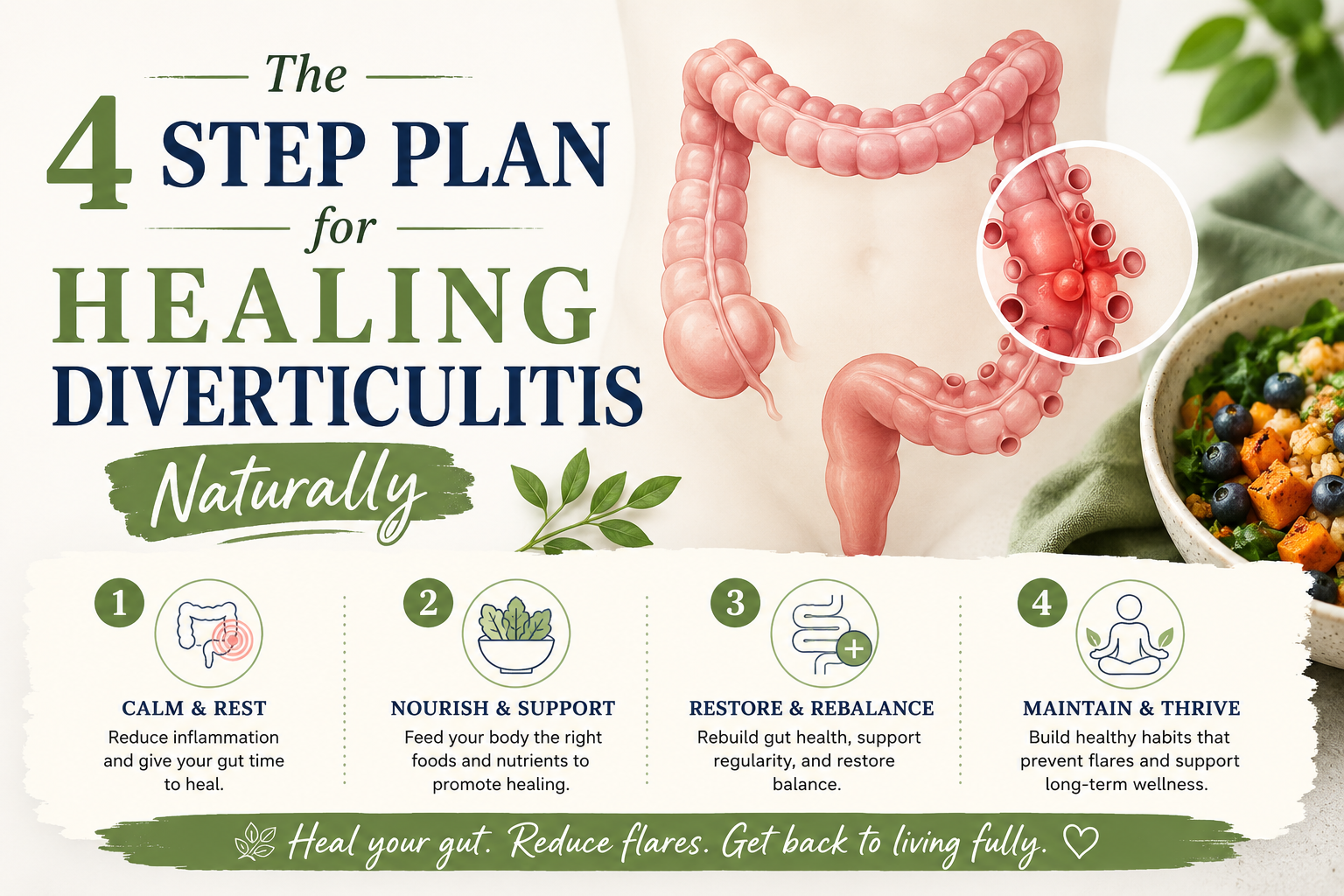
In my practice, I approach diverticulitis with a 4 step framework that focuses on calming inflammation, supporting the microbiome, restoring digestive function, and preventing future flare-ups. These cases are very rewarding because when people start improving they are so grateful.
Healing is not about one magic supplement or eliminating every food you enjoy. It is about rebuilding a resilient digestive system step by step.
Let’s break down the four pillars.
The 4 Step Plan for Healing Diverticulitis Naturally
What Is Happening During a Flare?
First off, what exactly is a diverticulitis flare? Diverticulitis occurs when small pouches in the colon (called diverticula) become inflamed or infected. During a flare, the intestinal lining is irritated and swollen. Motility may slow down, bowel movements may become painful, and digestion often feels unpredictable.
Common symptoms include the following:
- Left lower abdominal pain
- Bloating or pressure
- Fever or chills
- Constipation or diarrhea
- Nausea
- Loss of appetite
- Fatigue
Some cases require immediate medical attention, especially if there is severe pain, vomiting, bleeding, or signs of abscess or perforation. Always work with your healthcare provider if symptoms are severe. You may need antibiotics to prevent infection of the pouches.
For mild to moderate cases, these supportive nutrition and lifestyle strategies can make a major difference during a flare.
Step 1: Bowel Rest Clear Liquid Diet (1-3 Days)
When someone is actively in a diverticulitis flare, we want to avoid loading up on fiber. The gut is inflamed, irritated, and often hypersensitive, and fiber can worsen pain and bloating.
This is the phase where we want to reduce irritation and create an environment that allows the colon to calm down. During the first 24–48 hours of an acute diverticulitis flare, the primary goal is bowel rest.
When the colon is inflamed and irritated, digestion itself can become stressful for the digestive tract. Giving the bowel a temporary break allows inflammation to calm down and reduces mechanical strain on the colon.
This phase is not meant to last forever. It is simply a short-term strategy (24-72 hours) to help the gut settle during the most acute stage.
Why Bowel Rest Matters
During a flare, the intestinal lining is often swollen and hypersensitive. Eating large meals, high fiber foods, or difficult-to-digest foods too early can increase pressure in the colon and worsen symptoms like
- Cramping
- Pain
- Bloating
- Nausea
- Diarrhea
- Constipation
A temporary clear liquid diet minimizes residue in the digestive tract while helping maintain hydration.
What To Consume During Step 1
The focus here is hydration and minimal digestive effort. Think mostly liquid diet and fiber free diet.
Examples of clear liquids you can enjoy:
- Water
- Electrolyte drinks. I recommend this one. Important for minerals during a semi-fasting phase.
- Bone broth
- Vegetable broth
- Herbal teas such as slippery elm which is soothing to the gut lining
- Tea or coffee (without cream)
- Apple juice
- Collagen mixed with water
- Popsicles without fruit chunks or added sugars
Some people also tolerate diluted smoothies or protein beverages, but during the first 24–48 hours it is generally best to keep things as simple as possible.
Common Mistakes During Step 1
One of the most common mistakes is trying to “eat healthy” too quickly. Many people assume raw vegetables, salads, bran cereal, or large smoothies are always beneficial for gut health. But during an acute flare, these foods can actually worsen irritation.
This is also not the time for
- Fiber rich meals
- Heavy meals
- Alcohol
- Fried foods
- Restaurant foods
- High fat foods
- Excess sugar
- Large amounts of dairy
Another mistake is staying on a liquid diet for too long.
The bowel-rest phase is intended to be temporary. Usually 24–48 hours unless otherwise directed. Prolonged restriction can make recovery harder and may leave people undernourished. This is why it’s best to work with a practitioner who can appropriately guide you through the phases and timing.
Important Note
Severe abdominal pain, vomiting, inability to tolerate fluids, rectal bleeding, or high fever require immediate medical attention.
Some cases of diverticulitis can become serious and may involve abscesses, perforation, or obstruction. Always work with your healthcare provider regarding diagnosis and treatment.
Step 2: Low Fiber / Low Residue Healing Diet (3-7 Days, Up to 2 Weeks)
Once acute pain and inflammation begin to calm, the next phase involves transitioning into a low fiber, low residue diet.
This phase is where many people start feeling significantly better. The goal is to provide nourishment while still keeping digestion relatively easy and gentle on the colon.
What Is a Low Residue Diet?
A low residue diet limits foods that leave a large amount of undigested material in the colon. In other words, we are temporarily reducing foods that require more digestive work.
During this phase we’re gradually diversifying to solids but still keeping it low fiber. It is simply a strategic bridge between bowel rest and long term recovery.
Foods That Are Often Well Tolerated
Examples of easy to digest foods include:
- White rice
- Sourdough or gluten free rice bread (I recommend gluten free during this phase, but properly fermented sourdough is lower gluten)
- Eggs
- Well cooked carrots (without skins)
- Mashed potatoes without butter
- Oatmeal
- Applesauce (no sugar added)
- Bananas
- Fruit without skins
- Rice crackers
- Yogurt if tolerated
- Tender chicken or fish
- Smooth blended soups
- Well cooked vegetables
- Rice noodles
Cooking vegetables thoroughly makes them much easier to tolerate. Think steamed carrots, zucchini, squashes. You can continue to eat foods from the bowel reset phase, and sip bone broth for extra protein and nutrients.
Why This Phase Matters
The biggest goal here is symptom reduction. This stage gives the colon time to continue healing without overwhelming it. Most people remain in this phase for several days to a couple of weeks depending on symptom severity and individual tolerance. The key is to gradually transition.
You want to see the following:
- Reduced abdominal pain
- Improved bowel movements
- Less bloating
- Improved appetite
- Better energy
- Resolution of fever
This is also where hydration remains extremely important. I recommend these electrolytes first thing in the AM mixed with collagen, and continue this morning cocktail throughout the phases.
Constipation can increase pressure in the colon and aggravate diverticular symptoms, so fluid intake matters just as much as food choices. You can also use magnesium to keep bowels moving. This one is especially for constipation and contains triphala, an excellent bowel tonic.
Step 3: Gradual Reintroduction of Fiber (2-6 Weeks)
Once symptoms are mostly resolved, it is time to slowly reintroduce more fiber sources.
This is one of the most important phases in the healing process because it helps rebuild digestive resilience while reducing the risk of future flare-ups. But this transition needs to happen gradually.
One of the biggest reasons people struggle during recovery is because they go from extremely low fiber to suddenly eating higher fiber or harder to digest foods too quickly.
That abrupt shift can trigger:
- Gas
- Bloating
- Cramping
- Constipation
- Digestive discomfort
Your gut needs time to adapt.
Why Fiber Is Important
Fiber plays several critical roles in digestive health:
- Support regular bowel movements
- Feed beneficial gut bacteria
- Improve stool consistency
- Reduce pressure in the colon
- Support microbiome diversity
- Improve long-term digestive function
- Keep cholesterol in check
But more is not always better, especially too quickly.
Start Low and Go Slow
The best approach is gradual progression. Start by adding small amounts of gentle fiber-rich foods:
- Oatmeal or overnight oats (soaked overnight makes them easier to digest)
- Chia seeds
- Ground flax
- Cooked vegetables
- Berries
- Avocado
- Kiwi (great for constipation)
- Sweet potatoes
- Lentils in small amounts (1/2 cup)
Pay attention to symptoms. If significant bloating or pain develops, it may simply mean the increase happened too quickly.
Soluble vs. Insoluble Fiber
Some people tolerate soluble fiber better initially. Soluble fiber absorbs water and forms a softer gel-like consistency in the digestive tract. Examples include the following:
- Oats
- Psyllium
- Apples
- Chia
- Flax
- Beans
Insoluble fiber is rougher and more bulky:
- Raw vegetables
- Whole grains & bran
- Salads
- Skins of fruits and vegetables
During early recovery, many people do better emphasizing soluble fiber first before gradually increasing amounts of raw or insoluble fibers.
Step 4: High Fiber Maintenance for Long Term Prevention (Ongoing)
Once the first 3 steps are complete and the gut is calmed, the main goal is prevention and gut healing. This is where a high fiber, anti-inflammatory dietary pattern becomes incredibly important.
Research consistently shows that adequate fiber intake is associated with lower risk of recurrent diverticulitis. And most adults fall far short of recommended fiber intake.
How Much Fiber Do You Need?
Most people benefit from approximately 25–30 grams of fiber per day, but I recommend getting as close to 40 grams as possible. The key is consistency. Fiber works best when it becomes part of your normal lifestyle rather than a temporary intervention.
I often recommend this fiber to my diverticulitis clients to help reach fiber goals. This is especially important during the long term maintenance phase.
What a Fiber Forward Diet Looks Like
A long term diverticulitis prevention diet should emphasize a wide variety of whole foods including:
- Vegetables
- Fruit
- Legumes
- Beans & lentils
- Gluten free grains
- Nuts
- Seeds
- Avocados
The diversity matters. Different fibers feed different strains of beneficial bacteria within the microbiome. A varied, plant-rich diet helps support microbial diversity, healthy bowel movements, and reduced inflammation.
Add Fiber Slowly and Strategically
This is where nuance matters. Many people either avoid fiber forever out of fear or suddenly jump from 10 grams per day to 40 grams overnight. Neither approach works well.
Once inflammation is calmer, gradually increasing fiber can help improve stool consistency, support bowel regularity, nourish beneficial bacteria, and reduce pressure within the colon.
The key is going slowly. And remember to stay hydrated when increasing fiber! Start with the gentle, soluble fiber sources first, and monitor symptoms carefully.
If you continue to experience significant bloating, gas, or discomfort, it may signal underlying dysbiosis, SIBO, poor motility, or an overly aggressive increase in higher residue fibers.
What About Nuts, Seeds, and Popcorn?
For years, people with diverticulitis were told to avoid nuts, seeds, and popcorn because it was believed these foods could become trapped in diverticula and trigger inflammation. Current research does not strongly support this recommendation.
In fact, many people tolerate nuts and seeds perfectly well and can absolutely include them as part of a healthy high-fiber diet. That said, every person is different. Some individuals may notice certain foods trigger symptoms, especially during recovery. Bio-individuality matters.
Incorporate Fermented Foods
Fermented foods can support microbial diversity and are great for probiotics and enzymes.
Examples include:
- Plain yogurt
- Kefir
- Sauerkraut
- Kimchi
- Miso
However, not everyone tolerates these immediately, especially people with histamine intolerance or significant dysbiosis. This is why individualized care matters.
Don’t Ignore Lifestyle Factors
At this phase you also want to pay attention to daily habits like movement: Walking, strength training, and daily physical activity help support bowel motility and reduce stagnation in the digestive tract.
Stress management is also incredibly important, as flares can be triggered by stress/high cortisol. The gut and nervous system are deeply connected through the gut-brain axis. Chronic stress can worsen inflammation, impair motility, and contribute to digestive symptoms.
Many people notice flare-ups happen during periods of:
- Burnout
- Sleep deprivation
- Anxiety
- Overwork
- Emotional stress
Healing the gut often requires calming the nervous system too. I recommend breathing exercises to support nervous system balance. Especially before meals to put yourself into ‘rest and digest’ mode.
Gut Healing Supplements
This is the phase where I introduce targeted supplement support for gut healing. I recommend the following:
- Probiotics. I recommend this brand for diverticulitis specifically.
- This gut repair formula with glutamine
- Omega-3 fatty acids to keep inflammation in check
- Magnesium for nervous system support & regularity
- Digestive enzymes with meals to help assimilate foods and make them easier to digest
- Fiber
The right approach depends on your symptoms, bowel patterns, medication use, stress levels, and overall health picture. There is no universal protocol which is why you need to work with a professional.
Support Regular Bowel Movements
Regularity is very important to prevent future flares. Daily bowel movements should not require excessive straining.
Some helpful strategies to support regularity include:
- Adequate hydration
- Gradual fiber intake
- Magnesium
- Regular movement
- Squatty potty or foot stool positioning
- Consistent meal timing
Physical movement is super important, especially after meals. Sedentary lifestyles are strongly associated with constipation and digestive dysfunction.
You do not need extreme workouts. Even daily walking can significantly improve bowel motility and overall gut health.
Address Underlying Root Causes
Sometimes chronic digestive symptoms are connected to deeper issues such as:
- SIBO
- Hypothyroidism
- Chronic stress
- Low stomach acid
- Gallbladder dysfunction
- Hormonal imbalances
- Nervous system dysregulation
If you keep experiencing recurring flare-ups despite “doing everything right,” there is often an underlying root cause that has not been addressed. This is why a comprehensive functional medicine approach can be so valuable. I recommend GI MAP stool testing for all my diverticulitis clients. It tests for pathogens, parasites, and yeast and also has a great digestive health section that lets you know inflammation levels. You can order it here.
Preventing Flares
Preventing future flare-ups is not just about food. Other important factors include:
- Daily movement
- Managing stress
- Prioritizing sleep
- Avoiding smoking
- Limiting ultra-processed foods
- Maintaining healthy bowel regularity
One of the most important things I tell clients is that healing is not about perfection. You do not need a flawless diet. You need consistency. Small daily habits compound over time and create a healthier environment for the gut.
Manage Stress
I cannot overstate how important this piece is. Many clients notice flare-ups occur during periods of
- Burnout
- Sleep deprivation
- Anxiety
- Emotional stress
- Overwork
- Travel
- Major life changes
The digestive system is highly sensitive to nervous system overload. Long term healing often requires slowing down enough for the body to feel safe again.
Helpful stress-reduction practices may include:
- Therapy
- Breathwork
- Yoga
- Walking outdoors
- Earthing
- Meditation
- Reducing screen time
- Strengthening boundaries
- Prioritizing rest & healthy sleep habits
Stay Consistent
One of the biggest mindset shifts people need is understanding that healing is not linear. This is a talk I have with all my clients. You may have good weeks/days and bad weeks/days. It can sometimes feel like 2 steps forward and 3 back. But consistency is key. The goal is progress, not perfection. Small daily habits compound over time.
Conclusion
Healing diverticulitis is not about one miracle supplement or one perfect food. It is about supporting the digestive system through the appropriate healing phases.
The 4-step process looks like this:
- Bowel rest with a clear liquid diet
- Transitioning to a low-fiber healing diet
- Gradually reintroducing fiber
- Maintaining a long-term high-fiber lifestyle
Each phase serves a purpose.
When you move through them gradually and strategically, you give the colon time to recover while building a healthier digestive foundation for the future. The supplement protocol is a must to support and rebalance the colon.
Most importantly, remember that healing takes patience. Your gut does not need punishment. It needs support, nourishment, hydration, and time.
And with the right approach, many people are able to dramatically reduce symptoms and prevent future flare-ups naturally.
Book a complimentary discovery call with me here for diverticulitis support.
Frequently Asked Questions About Diverticulitis
Can I heal diverticulitis heal?
Many uncomplicated cases of diverticulitis improve with appropriate rest, dietary modifications, and medical supervision. While nutrition and lifestyle play an important role in recovery and reducing the risk of future flare-ups, it’s important to work with your healthcare provider to determine whether additional treatment, such as antibiotics or hospitalization, is necessary.
What’s the difference between diverticulosis and diverticulitis?
Diverticulosis refers to the presence of small pouches (diverticula) in the wall of the colon. Diverticulitis occurs when one or more of those pouches become inflamed or infected, causing symptoms such as abdominal pain, fever, nausea, and changes in bowel habits.
What should I eat during a diverticulitis flare?
The appropriate diet depends on the severity of your symptoms. During an acute flare, your healthcare provider may recommend a temporary clear liquid or low-fiber diet before gradually reintroducing solid foods. Once you’ve recovered, a diet rich in fiber is generally recommended to support long-term colon health.
Do nuts, seeds, and popcorn cause diverticulitis?
No. This was once considered a contributing factor, but current research has not found evidence that eating nuts, seeds, or popcorn increases the risk of diverticulitis attacks. Most people with diverticular disease do not need to avoid these foods unless they notice a personal intolerance.
Can constipation contribute to diverticulitis?
Yes. Chronic constipation may increase pressure within the colon, which can place additional stress on existing diverticula. Supporting regular bowel movements through adequate hydration, fiber (when appropriate), physical activity, and a healthy gut microbiome may help reduce the risk of future flare-ups.
Will I need antibiotics for diverticulitis?
Not always. In recent years, treatment recommendations have changed. Many people with uncomplicated diverticulitis recover without antibiotics, while individuals with more severe symptoms, compromised immune systems, or complications may still require them. Treatment should always be individualized by your healthcare provider.
Can diverticulitis recur?
Yes. Some people experience only one episode, while others have recurrent flare-ups. Long-term strategies such as eating a fiber-rich diet, staying hydrated, exercising regularly, and addressing constipation may help lower the risk of recurrence, although no approach can eliminate the risk entirely.
 Welcome to my site! I am a holistic nutrition consultant based in California, though I work with clients all over the world. I love houseplants, dogs, snow sports, and music that doesn't suck.