➡️Jump to Recipe⬅️
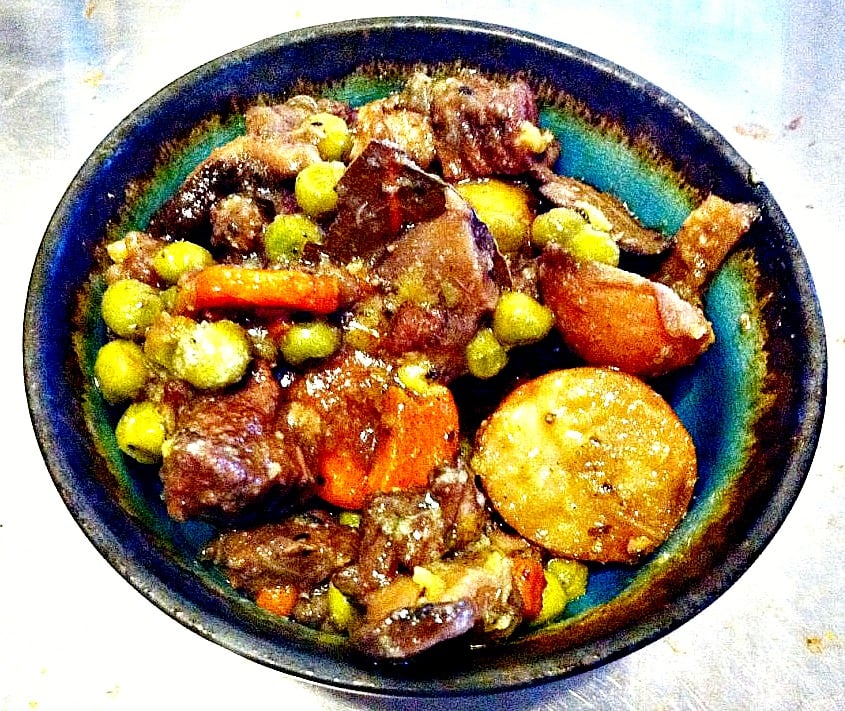
Grass fed beef stew with bone broth, shiitake, kombu, and thyme delivers mineral rich, immune supportive comfort food. Gluten free, AIP adaptable, deeply caramelized broth.
What’s better than a nutrient-dense, even-better-the-next-day hearty beef stew for cozying up on cold evenings? This isn’t your grandmother’s beef stew. Packed with superfoods, it’s beyond delicious, keeps for days, and doesn’t involve dredging the beef in refined white flour. Truly the best beef stew you’ll ever make.
They key to this stew is caramelizing the veggies in rounds and deglazing the skillet with broth after each round. Then you add the deglazed bits with broth to the stock which yields an amazingly rich and delicious broth base. This adds a few extra steps, but trust me, it’s well worth it. The perfect stew to toil over in the kitchen when you’d like a Sunday cooking project. Great to feed a crowd after a ski day or during wintery weather.
This beef stew can be made nightshade-free if you are on an autoimmune protocol or avoiding nightshades. You can easily leave out the tomato paste. I have made it both ways, with and without, and it’s delicious either way. I do add potatoes (also a nightshade), but you could also leave those out for a nightshade-free version. I recommend swapping them out for parsnips.
I also add shiitake mushrooms for and kombu, a type of kelp, for umami flavor and immune support. Shiitakes have a meaty texture and are a star among the cancer fighting medicinal mushrooms. And kombu is a mineral-roch sea vegetable rich in iodine and minerals.
I have used duck fat to brown the beef, and that was the best version of this stew I’ve made, but olive oil is fine for browning. I’ve also used lard to brown the beef. The saturated fats (solid at room temp) hold up better at higher temps.
This is a special stew recipe, and once you make it, you’ll see why. This is the only beef stew recipe you’ll need. You won’t be disappointed!

The Best Damn Beef Stew Ever
Ingredients
Method
- First, chop and prep all your ingredients.
- Season the cubed meat with a little salt and pepper.
- Start up the broth and red wine in a large dutch oven: bring it to a low simmer. I typically start off with about ½ bottle of wine and 2 cups of broth, then add more broth to desired thickness as the stew cooks.
- Heat the oil or your fat or choice in a cast iron skillet over a medium flame then cook the meat until browns on all sides. You will need to cook the meat in two batches to avoid crowding and for optimal browning.
- Add the beef to the dutch oven. Add kombu strips to the dutch oven (heretofore referred to as the "pot").
- Deglaze the skillet with some of the broth from the dutch oven and scrape the browned bits + deglazed broth back in to the pot.
- Add onions and garlic to the skillet and sautee til translucent - about 5-8 minutes, then add to pot.
- Deglaze the pan with a little of the simmering stock; add deglazed broth back to pot, and then add the potatoes; cook until they start to get a little crust on them but not all the way done. Add to pot. Deglaze skillet, add deglazed broth back to pot.
- Do the carrots next: saute; add to pot, deglaze, etc etc; then finally the mushrooms.
- NOTE You don't want to cook all the veggies until they're all the way done, because they'll come out mushy in the stew. Just about ½ way there or so.
- Add more stock if needed for desired thickness, then add all other spices and tomato paste. I typically add garlic powder and possibly some Italian seasoning too.
- Bring to a simmer then reduce heat to low and cook for at least an hour or more, adding more wine/stock as needed.
- Taste to adjust the seasonings. Add whatever is needed, or more wine/broth if you want it less thick.
- Add the optional frozen green peas (I love them because they give it a bit of a fresh green crunch) just before serving and heat through until done but not mushy.
- Garnish with the chopped parsley if desired. Enjoy!
 Welcome to my site! I am a holistic nutrition consultant based in California, though I work with clients all over the world. I love houseplants, dogs, snow sports, and music that doesn't suck.