What is the orgasm gap, and why does it matter? Discover the research on female orgasm, libido, hormones, clitoral anatomy, and the biological and cultural factors that influence women’s sexual health.
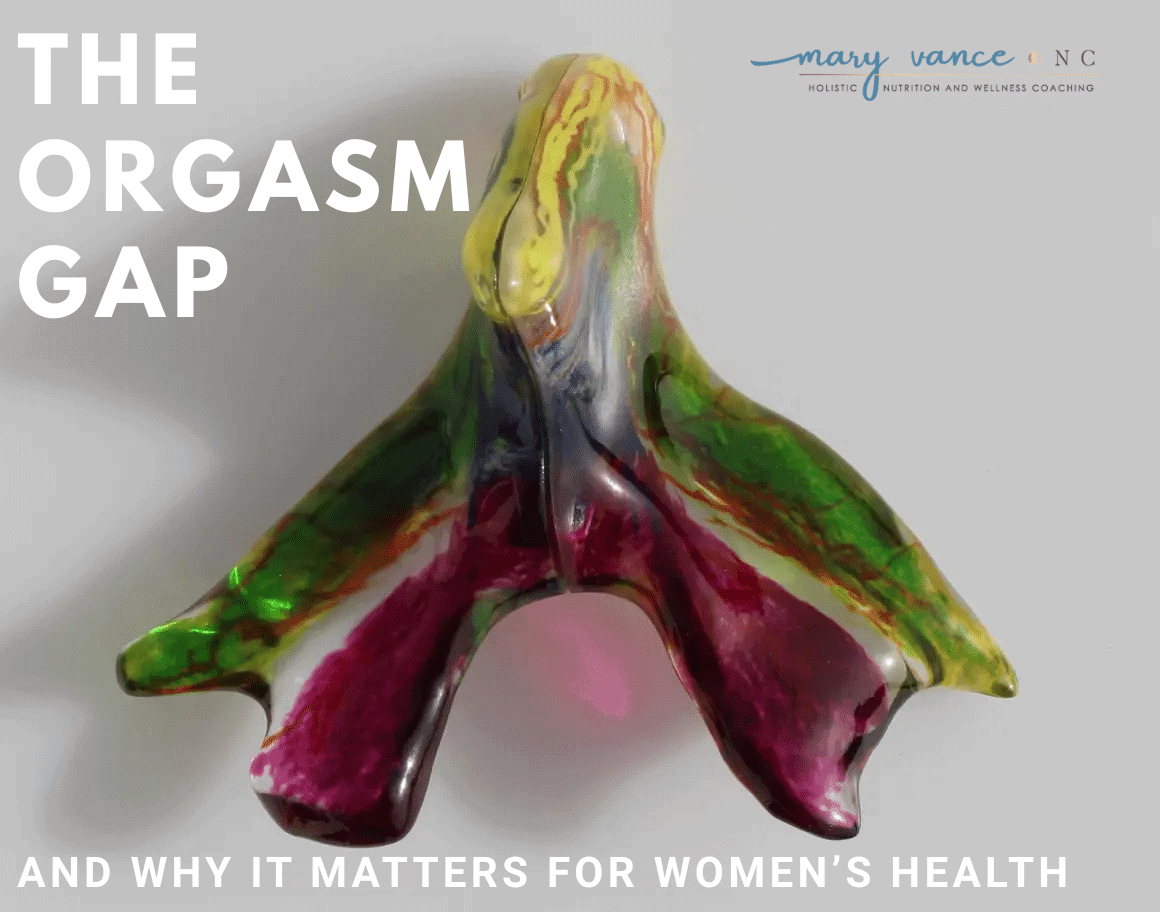
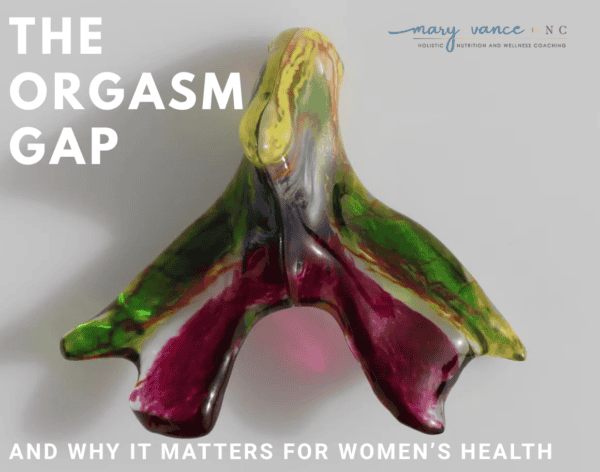
3D printed model of the clitoris based on the work of Ju Young Lee. Yellow structures are the nerves. Green and purple are erectile tissue. photo credit.
Why the Orgasm Gap Matters for Women’s Health
Women who lose interest in sex are often told they have low libido. But sometimes the problem isn’t desire; it’s pleasure. This post explores the science behind the orgasm gap, the role of hormones, and why female sexual satisfaction deserves far more attention in healthcare.
Let’s get into it.
We’ve spent decades asking why women don’t want more sex. Maybe we should spend a little more time asking whether they’re enjoying it.
As a women’s health nutritionist, I routinely ask clients about their libido. It’s part of every intake because hormones, thyroid function, stress, medications, and menopause can all influence sexual desire.
Not surprisingly, many women tell me they have a low libido. But over the years, I’ve noticed something interesting.
When we dig a little deeper, it isn’t always a lack of desire that’s driving the problem. Sometimes it’s a lack of pleasure. That’s an important distinction, and something no other practitioner has ever asked them. It’s not the same for men’s healthcare.
Desire doesn’t exist in a vacuum. It responds to experience. If sex consistently feels rushed, uncomfortable, predictable, or centered around someone else’s pleasure, why would your brain prioritize it?
For many women, the issue isn’t simply hormonal. It’s that we’ve spent generations misunderstanding female sexual pleasure.
And we’re now understanding that the female orgasm isn’t just about her pleasure; orgasms are beneficial for women’s overall health and happiness.
That’s where the concept of the orgasm gap comes in.
What Is the Orgasm Gap?
The orgasm gap refers to the well-documented difference in orgasm frequency between men and women during partnered sex.
Study after study has found that approximately 95% of heterosexual men report usually or always reaching orgasm during sex, compared to about 65% of heterosexual women. The gap is even wider during casual sexual encounters, where only about one-third of women report regularly orgasming. (source)
Interestingly, women in same-sex relationships report orgasm rates approaching 86%.
That tells us something important.
Women are not inherently difficult to satisfy. The problem isn’t female anatomy. It’s that heterosexual sex has historically been structured around a model that doesn’t consistently prioritize female pleasure.
Why Does the Orgasm Gap Exist?
The answer is both biological and cultural.
From a biological standpoint, most women simply aren’t wired to orgasm from penetration alone. Only about 15-18% reliably do. (source) The vast majority require direct or indirect stimulation of the clitoris.
That shouldn’t be surprising. The clitoris is the only human organ whose sole known function is pleasure.
Yet despite its importance, it’s astonishing how little attention it has received in medical education. In fact, the first comprehensive three-dimensional map of the clitoral sensory nerve network wasn’t published until 2026—nearly three decades after comparable mapping of penile nerves.
Our understanding of female sexual anatomy has lagged behind men’s for generations.
Biology, however, is only part of the story.
Cultural expectations have shaped our understanding of sex in ways that continue to influence women’s experiences today.
Many of us were raised with an unspoken (and unfortunately accepted) script:
- Sex begins with foreplay.
- Penetration is the main event.
- Sex ends when the male orgasms.
- If the woman orgasms too, that’s a bonus.
The problem is that this script doesn’t reflect female physiology. For most women, clitoral stimulation isn’t an optional extra. It’s central to orgasm.
Hormones Matter: But They Aren’t the Whole Story
As someone who works almost exclusively with women navigating hormone imbalances and perimenopause, I would never argue that hormones don’t influence libido. They absolutely do.
Declining estrogen in perimenopause can contribute to vaginal dryness and discomfort. Testosterone plays a role in sexual desire, and is an important female hormone! Thyroid dysfunction, chronic stress, antidepressants, poor sleep, and menopause can all affect libido.
Sometimes low desire really is a physiological issue, but hormones aren’t the whole story.
I’ve worked with women who assumed they had a hormone problem when, after talking through their experiences, it became clear that sex simply wasn’t particularly pleasurable.
Those are two very different problems requiring two very different solutions.
No supplement, hormone, or medication can make someone genuinely excited about an experience that consistently leaves them unsatisfied.
Why Are Women Faking It?
One of the most revealing statistics in sexual health research is that somewhere between 58% and 80% of women report having faked an orgasm. (source)
There are many reasons:
- to avoid hurting a partner’s feelings
- because they want the encounter to end
- because they’ve been taught that asking for what they need is uncomfortable or selfish.
Unfortunately, faking orgasms often reinforces the very problem it’s trying to solve. If a partner believes everything is working perfectly, there’s little opportunity to learn, adjust, or communicate about what actually feels good.
Good sex isn’t about mind-reading. It’s about curiosity, communication, and feedback, and these factors can all greatly strengthen a relationship.
Pleasure Is Part of Health
We rarely think of orgasm as a health issue, but perhaps we should.
Research has associated sexual pleasure and orgasm with reductions in stress hormones, increased oxytocin release, improved sleep quality, enhanced mood, greater relationship satisfaction, improved pelvic blood flow, and even reductions in menstrual and chronic pain.
In other words, pleasure isn’t just the icing. It’s part of overall wellbeing.
Interestingly, when men develop erectile dysfunction, medicine asks, How do we restore sexual function? When women lose interest in sex, we often ask, What’s wrong with her?
Sometimes the better question is: Is sex actually pleasurable for her?
Closing the Gap
The encouraging news is that the orgasm gap isn’t inevitable. Good sex isn’t something people instinctively know how to have. Like communication, it’s a skill.
Closing the orgasm gap starts with better communication and a better understanding of female anatomy. Partners who are curious, willing to ask questions, and open to feedback generally have better sex than those who assume they already know what works.
It also requires expanding our definition of sex. If penetration is always treated as the main event, many women are being set up for disappointment from the outset. For most, clitoral stimulation isn’t an optional extra—it’s central to orgasm. Oral sex, manual stimulation, and sex toys aren’t substitutes for “real” sex; they’re simply different ways of creating mutual pleasure.
Ultimately, closing the orgasm gap isn’t about asking women to lower their expectations or convincing men to work harder; it’s about creating a sexual relationship in which both people’s pleasure matters equally.
Conclusion
Instead of asking why women don’t want more sex…
Maybe we should ask whether women have been taught to expect less from it. Because while hormones, stress, medications, and aging all influence libido, desire is also shaped by experience.
When sex is pleasurable, emotionally connected, and responsive to both partners’ needs, people naturally want more of it.
Perhaps the conversation shouldn’t begin with how to increase women’s libido. It should begin with making sure women are actually enjoying the sex they’re already having.
Frequently Asked Questions
What is the orgasm gap?
The orgasm gap refers to the well-documented difference in orgasm frequency between men and women during heterosexual sex. Research consistently shows that men orgasm more frequently than women, while women in same-sex relationships report significantly higher orgasm rates than women in heterosexual relationships.
Why do women orgasm less often than men?
There isn’t a single explanation. The orgasm gap is influenced by several factors, including a greater emphasis on intercourse over clitoral stimulation, inadequate sexual education, poor communication about pleasure, relationship dynamics, and, for some women, hormonal changes that affect desire and arousal.
Can most women orgasm from penetration alone?
No. Research has consistently found that only a minority of women reliably orgasm from vaginal penetration alone. Most women require direct or indirect clitoral stimulation to reach orgasm.
Can hormones affect a woman’s ability to orgasm?
Yes. Estrogen, testosterone, thyroid function, certain medications (particularly SSRIs), stress, and menopause can all influence libido, arousal, vaginal comfort, and orgasm. Hormones are an important piece of the puzzle, but they’re rarely the only factor.
Is low libido the same as difficulty having an orgasm?
No. Libido (sexual desire) and orgasm are related but distinct. A woman may have a healthy sex drive but struggle to reach orgasm, or she may experience low desire because sex has become unsatisfying over time. Addressing one issue doesn’t automatically resolve the other.
Do orgasms have health benefits?
Research suggests that orgasm may support stress reduction, improve sleep, promote relaxation, and strengthen emotional intimacy. Sexual pleasure is a normal and meaningful part of overall well-being.
 Welcome to my site! I am a holistic nutrition consultant based in California, though I work with clients all over the world. I love houseplants, dogs, snow sports, and music that doesn't suck.