
Nutritionist pantry staples include green tea, raw sauerkraut, coconut oil, dark chocolate, leafy greens, collagen, wild salmon, coconut milk, root vegetables, eggs, bone broth, and superfoods.
Do you ever wonder what’s in a nutritionist’s pantry and fridge? Here are the staples I always have on hand. Come, let’s take a look.
10 Foods that are Always in My House
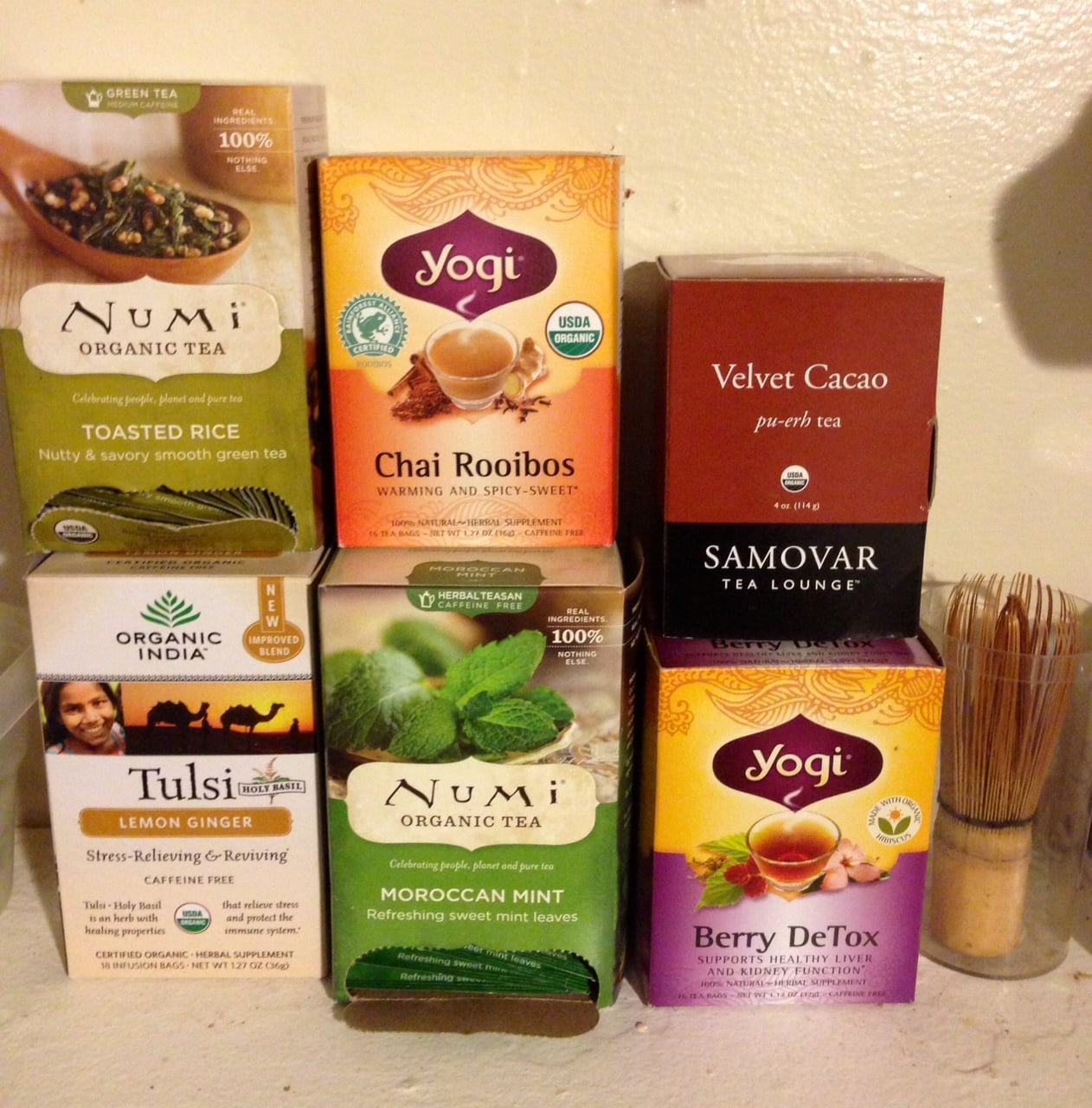
1) Green tea & herbal tea of all kinds. I am a huge tea fan and have previously waxed poetic with my ode to tea. Tea has amazing health benefits, and I start my day off with green tea or the magical pu-erh, a fermented dark tea. I also love mint tea and ginger tea for digestion and Tulsi tea for stress hormone balance. Here’s the little tea nook in my pantry. You can see my matcha whisk made it in the photo too. I love a shot of matcha for an afternoon pick-me-up. (not pictured: the matcha, which I keep in the refrigerator, and the tin of assorted tea bags that don’t have boxes for homes).
2) Raw sauerkraut. I eat raw, traditionally cultured veggies every day for their probiotics and enzymes that support digestion and immune health. I typically choose Farmhouse Cultures because it’s unpasteurized, fermented, nutrient-dense, and probiotic- and enzyme-rich. I use the leftover juice in the mugs of bone broth I drink several times a week for gut, hair, skin, and joint health. Delicious & briny!

3) I go through so much coconut oil that I buy the big 54 oz jugs. I give my dog a spoonful daily– she loves it! I use coconut oil for all my cooking and sauteeing, and I use it in baking, for skincare, and often just a spoonful with some almond butter for a snack. Yummmmm. Read all the amazing health benefits coconut oil offers here. Here’s Shaia the labradoodle getting just a little pinch.

4) Dark chocolate. Cannot live without the stuff. It’s a superfood, after all. I love Lake Champlain and AlterEco. I also keep raw cacao on hand for baking.
5) Greens. Another superfood filled with antioxidants, vitamins and minerals. I always have kale, Swiss chard, or collard greens on hand. I also eat spinach and beet greens (often together) regularly. I keep raw mixed salad greens around for a quick lunchtime salad; I especially love peppery arugula, and watercress has some amazing superfood benefits.
6) Collagen. I add it to smoothies. It’s amazing for skin, hair, joint, and gut health. Read more amazing benefits here.
7) Smoked salmon or lox. I can get wild smoked salmon from my corner market, and it’s great over a mixed green salad with avocado for the fastest-to-assemble lunch if I don’t have time to cook. It lasts for several days, so I can eat it with cucumber for a snack, or with raw kraut and avocado for a quick breakfast too. Super high in those anti-inflammatory omega 3s.
8) Coconut milk. I start most days with a smoothie, and coconut milk is my go-to to thicken it up. Filled with good fats. I also use it as a dairy free alternative to milk in baking. This kind is BPA free.
9) Root vegetables. I always have sweet potatoes, beets, carrots, and usually parsnips on hand for roasting. Less often I’ll include celery root, which I LOVE pureed or mashed as a creative alternative to potatoes. Roasted root veggies are high in minerals and are easy to make–passive cooking!
10) Eggs. I don’t eat eggs regularly due to a suspected sensitivity to them, but I get them fresh from friends’ chickens and use them when I make brunch for a crowd (I just leave them off my plate– click here for my favorite eggless brunch recipe). And I use them for baking of course. The deep orange yolks from happy roaming chickens that get grubs and veggies from my friends’ garden tell me they’re rich in B vitamins, fatty acids, and choline and lutein. Eggs are a true superfood (if you’re not sensitive to them).
Honorable Mention: Superfoods!
I also keep spirulina and moringa powders to add to my smoothies. These superfoods are full of minerals and nutrients to keep your body functioning optimally.
I don’t go more than a few days without high quality bone broth. I can easily order it from Good Eggs here in San Francisco. It’s super gelatinous so I know it’s full of all the good stuff. Broth is truly a superfood and recently helped me beautifully heal my fractured wrist! It’s also great for skin and hair.
Frequently Asked Questions
Why are teas a daily staple in this kitchen?
Herbal and traditional teas support digestion, hydration, stress balance, and gentle energy. Green tea provides antioxidants, pu erh supports metabolism, and ginger, mint, and tulsi calm the gut and nervous system. Daily tea drinking adds polyphenols and steady hydration without added sugar.
What makes raw sauerkraut different from regular sauerkraut?
Raw sauerkraut is unpasteurized and contains live probiotics, enzymes, and organic acids that support gut microbiome balance. Pasteurized versions lose these benefits. The fermented cabbage and its juice help digestion, immune strength, and healthy bacterial diversity.
How is coconut oil used beyond cooking?
Coconut oil is valued for its stable saturated fats, making it ideal for cooking and baking at higher heat. It is also used for skin care, oil pulling, and quick snacks. Its medium chain fats provide rapid energy and can support metabolic balance.
Why are leafy greens always kept on hand?
Leafy greens such as kale, spinach, and arugula supply folate, magnesium, vitamin K, and antioxidants that support detox pathways and immune health. Rotating varieties increases phytonutrient intake and supports consistent mineral consumption for energy and recovery.
How does collagen fit into a daily diet?
Collagen peptides are added to smoothies or warm drinks to support connective tissue, skin elasticity, gut lining integrity, and joint comfort. Because collagen is nearly flavorless and easy to digest, it integrates smoothly into daily meals.
What is the benefit of keeping smoked salmon available?
Smoked salmon offers convenient protein and omega 3 fatty acids that support anti inflammatory pathways, heart health, and brain function. It pairs easily with vegetables and healthy fats, making it a fast option for nutrient dense meals.
Why are root vegetables considered essential pantry foods?
Root vegetables such as carrots, sweet potatoes, and beets provide complex carbohydrates, potassium, and fiber. They store well, roast easily, and support steady blood sugar levels, making them reliable staples for balanced, whole food meals.
 Welcome to my site! I am a holistic nutrition consultant based in California, though I work with clients all over the world. I love houseplants, dogs, snow sports, and music that doesn't suck.